WSRC-TR-2001-00594
SRT-RPP-2001-00228
Cesium Eluate Analytical Data Evaluation
R. A. Pierce
Westinghouse Savannah River Company
Aiken, SC 29808
Keywords: Hanford River Protection Project, Cesium, Eluate, Evaporation
1.0 Executive Summary
Bechtel National Inc. (BNI) is using IBC Company’s SuperLigand ion exchange resins to separate Cs and Tc from low-activity waste (LAW) solutions. Cesium is removed using the SuperLig® 644 resin. The resin is then eluted after each use cycle with 0.5M nitric acid solution. BNI is planning to evaporate the Cs eluate solution to reduce the processing and storage volumes and recover eluate for re-use. The primary issue associated with evaporation is end point, or salt matrix solubility. As a result, an accurate and broad understanding of the effects of constituent species on the bulk solubility must be developed prior to effective evaporator operations. According to available computer models, the current solubility target of 80% of saturation occurs at evaporator acid concentrations of 3-5M HNO3.
Researchers, using Hanford waste samples and simulants, have already performed several ion exchange tests that have characterized the chemical properties of cesium eluate. A compilation and analysis of the available data has been performed to develop a representative and statistically useful test matrix for experimental studies, and to provide input to the RPP-WPT flowsheet development. At the request of BNI, the data were evaluated from four perspectives in accordance with the test specification: 1) charge balance, 2) halide content, 3) organic concentration, and 4) minimum and maximum analyte concentration (LONGWELL-2001).
Charge balance showed that nitric acid used to elute the SuperLig 644 resin is present in significant excess over all other cations. As a result, the concentration of hydronium ion was effectively eliminated from consideration in analyzing the data for solubility experiments. However, the effect of solubility at nitric acid concentrations of 3-5M will be tested to account for potential eluate acidity variations caused by variations in eluant acid concentration and overall concentration factors. Based on available data and the behavior of fluoride and chloride during evaporation, it was judged that halide content could be disregarded for these tests because more recent analyses in SRTC, PNNL, and TFL testing have halide levels below detection limits. However, future studies with eluates produced by the TFL will evaluate the effects of the expected low levels of chloride in the Cs eluate evaporation process.
The organic analysis identified a need to test the effect of three organic analytes: dibutylphosphate (DBP), oxalic acid, and EDTA. The analysis of cation concentrations led to including nine cation nitrates in the simulant (Na, K, Cs, Fe, Al, Mg, Ca, Cu, Zn) and allowing six of the nine cation concentrations to vary (Na, K, Cs, Fe, Al, Ca). The data from previous ion exchange tests were combined and compared on a sodium-cation weight ratio. This normalizes the data against sodium, the dominant analyte. The normalized data were then used to determine the maximum and minimum analyte bounds for the test matrix. Also, since sodium nitrate is most likely the dominant precipitate that forms (BAICH 2000), treating the data in this manner correlates the data to the expected major precipitating species.
The evaluation produced a 14-point test matrix that contains four defined tank compositions, duplicate center compositions, and eight additional matrix test points. Three additional solubility experiments will be performed with oxalic acid, DBP, and EDTA added to one of the center composition to evaluate the potential effect of the three organic analytes on cesium eluate solubility. Based on laboratory and operating experience, these 17 test cases will help validate the OLI model, predict evaporator behavior, and, where necessary, supplement the OLI database. This report supports the test plan elaborated in the TTQAP titled, "Task Technical and Quality Assurance Plan for Evaluating the Evaporation Behavior of Cs Eluate" (PIERCE 2001). This document fulfills the requirements 1.6.1.1 and 1.6.1.2 of the reference test specification (LONGWELL-2001).
2.0 Introduction and BackgroundBechtel National Inc. (BNI) is using IBC Company’s SuperLigand ion exchange resins to separate Cs and Tc from low-activity waste (LAW) solutions (IBC-1996). Cesium is removed using the SuperLig® 644 resin. The resin is then eluted after each use cycle with 0.5M nitric acid solution. BNI is planning to evaporate the Cs eluate solution to reduce the storage volume and recover eluate for re-use. The primary issue associated with evaporation is end point, or salt matrix solubility. To preclude formation of solids during the storage of evaporator products, an additional criteria has been set that limits the concentration of the evaporator bottoms to 80% of saturation at 25oC. As a result, an understanding of the effects of constituent species on the bulk solubility must be developed prior to effective evaporator operations.
A computer-based evaporator model is being developed using the OLI Environmental Simulation Program (OLI-1999). The evaporator model will aid in predicting evaporator behavior for a given eluate concentration and set of operating conditions. At this stage of the program, experimental work must be performed to validate the model and, where necessary, supplement the OLI database. Because of the inability to work with actual waste solutions, evaporation experiments must be conducted using representative cesium eluate simulants. At the same time, the test matrix developed should also use a statistically designed matrix of tests to determine the effects of selected variables on evaporator behavior.
In parallel work, SRTC personnel will conduct batch experiments to determine ion solubility and to measure a series of physical properties of concentrated (or saturated) cesium eluate simulant solutions. (PIERCE-2001) Experiments will study the effect of various ionic species on the overall solubility and physical properties of the concentrated eluate solutions. Test concentrations will be selected to evaluate the expected operating region for the liquids to be fed to the cesium eluate evaporator. Future experiments that are a part of this task will be conducted with eluate simulants produced by the TFL pilot ion exchange system.
Researchers, using Hanford waste samples and simulants, have already performed several ion exchange tests that have produced cesium eluate data. Data is available from PNNL for experiments using waste from Tanks AN-107 and AW-101 (KURATH-2000A, KURATH-2000B). SRTC has run tests with waste from Tanks AN-107, AN-105, AN-103, AN-102, AW-101, and AZ-102 (HASSAN-1997A, HASSAN-1997B, HASSAN-1997C, HASSAN-2000A, HASSAN-2000B, HASSAN-2000C, HASSAN-2001). The Thermal Fluids Lab at SRTC has conducted a pilot-scale experiment using a Tank AN-105 simulant (STEIMKE-2001). A compilation and analysis of the available data is necessary for the development of a representative and statistically useful test matrix. At the request of BNI, the data were evaluated from four separate perspectives: 1) charge balance, 2) halide content, 3) organic concentration, and 4) minimum and maximum analyte concentration. This document defines the test matrix for solubility testing and fulfills requirements 1.6.1.1 and 1.6.1.2 of the reference test specification (LONGWELL-2001).
The results of this document have been verified by document review in accordance with the reference task technical and quality assurance plan (PIERCE-2001).
3.0 Data Evaluation and DiscussionThe first step to data evaluation is to compile available data on cesium eluate concentrations (Appendix A). For experiments where duplicate analyses were performed, an average value of the data was used. The compilation includes five small-scale tests at SRTC using Hanford waste, two small-scale tests at PNNL using Hanford waste, and one pilot-scale test at the SRTC Thermal Fluids Lab (TFL) with a waste simulant. Not all cations that were measured are listed in Appendix A. The components listed are those consistently measured at sufficient levels (>10 mg/L) to warrant consideration for the matrix. The value of 10 mg/L was arbitrarily selected because it is judged to be a negligible amount in comparison with the major components. The "<" symbol lists values that are below the specified level. In some cases these are data points below the detection limit; in other cases they represent values that were detected but still below the specified limit. Blank spaces indicate that the analysis was not performed. Eluate acidity data were not found in the appropriate reports.
Next, the data in Appendix A were normalized to compensate for varying levels of salt dilution that occurred during elution. Normalizing the data accounts for the unequal levels of dilution that occurred across the program during resin elution. The data were normalized to an arbitrary elution of 13 column volumes (Appendix B). The value for nitrate is not normalized because the eluant (nitric acid) represents the primary nitrate source in the eluate and should be constant regardless of elution volume. Blank spaces have been included in Appendix B to indicate where values were not measured, or when values were below certain analytical detection limits. However, those values that had a detection limit of 100 mg/L or less have been recorded in Appendix B. The objective of this presentation of the data is to show the data that can be used to defend conclusions about the absence of certain analytes. This, too, is an arbitrary construct.
3.1 Charge Balance
In the cesium eluate system, the dominant component is nitrate from nitric acid. Typical nitrate analyses are on the order of 20,000-30,000 mg/L while total metal cation concentrations are on the order of 1000-3000 mg/L. Hydronium ion concentration data for the cesium eluate are not available. Charge balance confirms that the nitric acid used to elute the SuperLig 644 resin is present in significant excess over all other cations. As a result, the concentration of hydronium ion was effectively eliminated from consideration in analyzing the data for solubility experiments.
Nonetheless, the effect of acidity on cesium eluate evaporation solubility has been considered. Inherent in the planned test matrix is a measurement of solubility over the range of 3-5M HNO3. This acid range was selected for testing because according to available computer models, the current solubility target of 80% of saturation occurs at evaporator acid concentrations of 3-5M HNO3. Future ion exchange experiments should analyze the acidity of the eluant and the acidity of the eluate in order to determine the effect of elution on acidity.
3.2 Halide Content
Based on the data, the following conclusions have been reached:
3.3 Organic Concentrations
Addressing the presence of organics in the cesium eluate is very difficult due to the lack of ion exchange eluate data regarding the chemical compounds comprising the organic fraction of the eluate. A review of Appendix B data provides sufficient grounds for not ignoring the presence of organic carbon. Appendix B shows four TOC (total organic carbon) data points from 100-1000 mg/L. These are considered to be the better data points. The value at 9300 mg/L for Tank AN-107 can be attributed to resin residual organic products from the resin manufacturing process. A similar test during this time frame using Tank AN-105 waste also produced a high TOC number of 14500 mg/L. This occurred during early tests. Later experiments using improved resin pretreatment techniques do not exhibit high TOC levels in the eluate.
The identity of organic compounds in the eluate is completely open to speculation. A BNFL report lists the organic analyses for supernate samples from Tanks AN-107 and AW-101 (CAMPBELL-2000). The semi-volatile organic analyses (SVOA) show the n-paraffin hydrocarbon, nonane, as the only semi-volatile component with a concentration above 10 mg/L (110 mg/L for Tank AN-107 and 89 mg/L for Tank AW-101). The volatile organic analysis (VOA) of the supernate showed no compounds above 1 mg/L. Ion chromatography data for nonvolatiles showed 200-600 mg/L oxalate, 1700-2100 mg/L formate, and 1200-4000 mg/L acetate/glycolate.
Based on the BNFL report and informal discussions with those familiar with this issue, there are ten compounds that are viewed as most likely: 1) formate, 2) citrate, 3) gluconate, 4) glycolate, 5) TBP, 6) n-paraffin hydrocarbon (NPH), 7) acetate, 8) oxalate, 9) dibutylphosphate (DBP), and 10) EDTA (ethylenediaminetetraacetic acid). However, because of reactions between certain organics and nitric acid, some of these compounds are not issues for cesium eluate evaporation. Formate is oxidized by strong nitric acid to form carbon dioxide and water (KIRK-OTHMER-1994A). Citrate, gluconate, and glycolate are expected to react with nitric acid to form oxalate (KIRK-OTHMER-1994B).
In addition, because of volatility, other compounds will volatilize during evaporation and, therefore, will not impact solubility (Table 1). Extensive studies have been performed at WSRC to evaluate the behavior of TBP and NPH during evaporation; TBP is the less volatile of the two compounds. (SCHULZ-1984, CRC-1985) Working with TBP at the solubility limit, approximately 400 mg/L in water and 340 mg/L in 0.5M HNO3, data from SRTC show that TBP and NPH readily steam strip during evaporation to less than 1 mg/L (PIERCE-2000).
Confirmatory data were collected by WSRC Operations in which 11000 pounds of enriched uranium solution with 25 mg/L TBP was evaporated (DYER-2001). The resulting solution contained less than 0.1 mg/L TBP. Since cesium eluate data shows the TOC levels to be in a comparable range, it is expected that steam stripping will remove TBP and NPH during evaporation. DBP, a degradation product of TBP, is not volatile (PIERCE-1999).
Organic volatility also makes it possible to omit the potential effects of acetic acid on cesium eluate solubility. Acetic acid is significantly more volatile than TBP or NPH. Consequently, acetic acid will volatilize from the evaporator bottoms. Vapor pressure data for acetic acid are compared in Table 1 with those for TBP and n-paraffin hydrocarbons (CRC-1985). The NPH data in Table 1 are for nonane and dodecane.
As a result, only three organic compounds need to be considered for their effect on cesium eluate solubility: oxalate, DBP, and EDTA. It should be noted that oxalate may be destroyed during evaporation. Oxalate is readily destroyed by nitric acid in the presence of catalytic amounts of manganese to form CO, CO2, and O2. (CHIECO-1997). Some cesium eluate samples have shown measurable quantities of manganese. It is unclear whether or not another cation present in the eluate is also capable of facilitating the degradation of oxalate.
Each of these compounds will be evaluated individually to assess their impact on solubility. Assuming an average TOC concentration of 500 mg/L (based on Appendix B data in the 100-1000 mg/L range), the maximum molar concentrations expected in the cesium eluate feed for each of the remaining organic components is 0.005M for DBP, 0.004M for EDTA, and 0.021M for oxalic acid. An average tank composition will be tested at a TOC level that correlates to 500 mg/L TOC in the cesium eluate. The solubility levels for the tests with organic will be compared against those without organic present.
Table 1. Vapor Pressure of Acetic Acid, TBP, and NPH
|
Temperature Yielding Specified Vapor Pressure |
||||
|
Vapor |
Acetic |
TBP |
NPH |
NPH |
|
10 torr |
17.5oC |
150oC |
38oC |
90oC |
|
40 torr |
43oC |
186oC |
66oC |
122oC |
|
100 torr |
63oC |
214oC |
81oC |
146oC |
3.4 Minimum and Maximum Analyte Concentration
Based on the data and the chemical behavior of the eluate evaporator system, the following conclusions have been reached:
Table 2. Na:Cation Weight Ratios for Cesium Eluates
from the Processing of Various Hanford LAW Types
|
Tank of Origin |
AN-103 |
AN-102 |
AZ-102 |
AN-107 |
|
Na:cation |
Na:cation |
Na:cation |
Na:cation |
|
|
Cation |
Wt. Ratio |
Wt. Ratio |
Wt. Ratio |
Wt. Ratio |
|
Cs |
9.2 |
61.7 |
3.4 |
20.2 |
|
K |
14.7 |
18.5 |
15.2 |
28.2 |
|
Na |
1.0 |
1.0 |
1.0 |
1.0 |
|
Al |
18.0 |
5.5 |
406.5 |
31.0 |
|
Ca |
3.7 |
22.4 |
180.7 |
93.1 |
|
Cu |
132.5 |
49.3 |
870.0 |
58.2 |
|
Fe |
88.3 |
211.4 |
406.5 |
14.8 |
|
Mg |
81.5 |
164.4 |
435.0 |
310.3 |
|
Zn |
50.5 |
370.0 |
465.5 |
465.5 |
|
Wt% Na |
64.2 |
75.2 |
72.8 |
82.1 |
Furthermore, the following set of engineering judgments have been made regarding the test matrix:
The data from Table 2 were converted to show the cations on a weight percent basis (Table 3). Table 3 also shows a recommended test range for each cation. The highlighted cells indicate those analytes that will be variables in the test matrix. Some low values from the actual tank concentrations of Table 3 are outside of the range of the proposed test matrix, but this should not affect overall results because of their low concentrations. Only one high value (Cs for Tank AZ-102) is outside of the test matrix. It was judged preferable to not over-extend the size of the matrix for the sake of one point. The upper limit for cesium in the matrix (which is 18) is still well above the next highest tank concentration for cesium, which is 6.97 for Tank AN-103.
Table 3. Relative Cation Weights for the Test Matrix
|
RELATIVE CATION WEIGHTS (grams) |
||||||
|
MATRIX |
MATRIX |
|||||
|
LOWER |
UPPER |
|||||
|
LIMIT |
LIMIT |
AN-103 |
AN-102 |
AZ-102 |
AN-107 |
|
|
Cs |
1.20 |
18.00 |
6.97 |
1.22 |
21.70 |
4.06 |
|
K |
2.00 |
6.00 |
4.36 |
4.07 |
4.79 |
2.91 |
|
Na |
60.00 |
90.00 |
64.24 |
75.20 |
72.75 |
82.10 |
|
Al |
1.20 |
18.00 |
3.58 |
13.62 |
0.18 |
2.65 |
|
Ca |
1.20 |
18.00 |
17.58 |
3.35 |
0.40 |
0.88 |
|
Cu |
0.80 |
1.20 |
0.48 |
1.52 |
0.08 |
1.41 |
|
Fe |
0.60 |
9.00 |
0.73 |
0.36 |
0.18 |
5.56 |
|
Mg |
0.24 |
0.36 |
0.79 |
0.46 |
0.17 |
0.26 |
|
Zn |
0.24 |
0.36 |
1.27 |
0.20 |
0.16 |
0.18 |
3.5 Proposed Test Matrix
3.5.1 Metal Cation Effects on Solubility: The proposed upper and lower test ranges are shown in Table 3 along with the four defined tank compositions. The data treatment discussed above normalizes the data against sodium, the dominant analyte. Also, since sodium nitrate is expected to be the precipitate that forms at the solubility limit, treating the data in this manner correlates the data to the precipitating species.
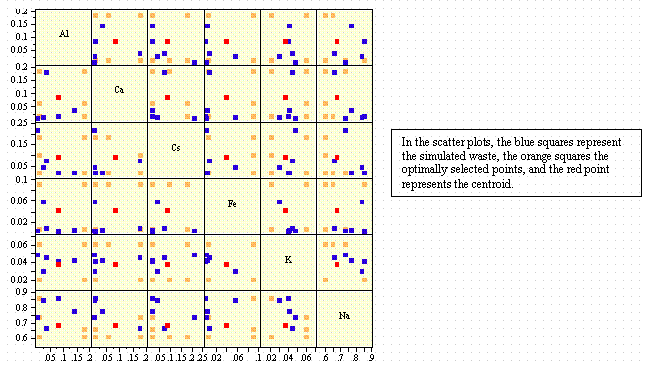
To develop a statistically designed test matrix using the matrix limits and four tank compositions, the data from Table 3 were incorporated into the JMP Version 4.0.5 software. Schedule and manpower constraints dictated limiting the total number of solubility tests to 13-17 experiments. The problem was defined as a mixture experimental design problem with six variables and the constraints of Table 3. The software provided an opportunity to determine the corner points, or extreme vertices, of the constrained region. Based on the JMP analysis of the matrix constraints, a 14-point test matrix was selected (EDWARDS-2001). The matrix contains the four tank compositions, two identical center points, and eight other matrix points. These points will provide the opportunity for relating cesium eluate solubility to a linear function of the six components over the region of interest. The matrix is shown in Table 4. A multivariate correlation and scatter plot matrix of data points are displayed in Appendix C.
It should be noted that the four tank compositions will be tested at nominal acid concentrations of 3, 4, and 5M HNO3. The matrix (MTRX) and center (CNTR) compositions will be tested at nominal acid concentrations of 3 and 5M HNO3. The variance of acid concentration will allow the test matrix to encompass potential variability in eluate acid concentrations caused by variations in eluant acid concentration and overall concentration factors. According to available computer models, the current solubility target of 80% of saturation occurs at evaporator acid concentrations of 3-5M HNO3.
Table 4. Statistically Designed Test Matrix
|
CATION WEIGHT PERCENT |
|||||||||
|
Al |
Ca |
Cs |
Fe |
K |
Na |
Cu |
Mg |
Zn |
|
|
MTX-1 |
17.77 |
17.77 |
1.18 |
0.59 |
1.97 |
59.44 |
0.79 |
0.24 |
0.24 |
|
MTX-2 |
1.18 |
17.77 |
9.68 |
8.89 |
1.97 |
59.24 |
0.79 |
0.24 |
0.24 |
|
MTX-3 |
1.18 |
1.18 |
1.18 |
8.84 |
1.96 |
83.87 |
1.12 |
0.34 |
0.34 |
|
MTX-4 |
17.77 |
1.18 |
17.77 |
0.59 |
1.97 |
59.44 |
0.79 |
0.24 |
0.24 |
|
MTX-5 |
17.77 |
5.73 |
1.18 |
8.89 |
5.92 |
59.24 |
0.79 |
0.24 |
0.24 |
|
MTX-6 |
1.18 |
5.73 |
17.77 |
8.89 |
5.92 |
59.24 |
0.79 |
0.24 |
0.24 |
|
MTX-7 |
17.76 |
1.18 |
1.18 |
8.88 |
5.92 |
63.72 |
0.85 |
0.25 |
0.25 |
|
MTX-8 |
1.18 |
17.72 |
1.18 |
0.59 |
5.91 |
71.88 |
0.96 |
0.29 |
0.29 |
|
CTR-A |
8.24 |
8.24 |
8.24 |
3.98 |
3.63 |
66.26 |
0.88 |
0.27 |
0.27 |
|
AN-103 |
3.62 |
17.60 |
7.08 |
0.74 |
4.43 |
65.14 |
0.87 |
0.26 |
0.26 |
|
AN-102 |
13.75 |
3.37 |
1.23 |
0.36 |
4.09 |
75.60 |
1.01 |
0.30 |
0.30 |
|
AZ-102 |
0.18 |
0.40 |
21.13 |
0.18 |
4.73 |
71.85 |
0.96 |
0.29 |
0.29 |
|
AN-107 |
2.65 |
0.88 |
4.07 |
5.55 |
2.91 |
82.18 |
1.10 |
0.33 |
0.33 |
|
CTR-B |
8.24 |
8.24 |
8.24 |
3.98 |
3.63 |
66.26 |
0.88 |
0.27 |
0.27 |
3.5.2 Organic Effects on Solubility: In addition to the above 14-point test matrix, three additional solubility experiments will be performed to evaluate the potential effect of three organic analytes on cesium eluate solubility. Oxalic acid, DBP, and EDTA will be added to the center composition (CTR-A) at a nominal concentration of 3M HNO3 in accordance with the discussion above in Section 3.3. The solubility with organic present will be compared against the duplicate data points for the center tank composition without organic.
4.0 Conclusion/Summary
BNI is planning to evaporate Cs eluate solution to reduce the processing and storage volumes and recover eluant for re-use. The primary issue associated with evaporation is end point, or salt matrix solubility. As a result, an accurate and broad understanding of the effect of several variables on salt solubility must be developed as a prerequisite to effective evaporator operations. A computer-based evaporator model is being developed using the OLI Environmental Simulation Program (OLI-1999). At this stage of the program, experimental work must be performed to validate the model and, where necessary, supplement the available OLI database. Experiments will study the effect of various ionic and organic species on the overall solubility and physical properties of the evaporated eluate.
A compilation and analysis of the available data has been performed in order to develop of a representative and statistically useful test matrix. The available data are incomplete, especially with respect to halide and organic analyte analyses. Nonetheless, the data were evaluated with respect to 1) charge balance, 2) halide content, 3) organic concentration, and 4) minimum and maximum analyte concentration.
The effect of charge balance can be disregarded for cesium eluate evaporation because the total nitrate concentration of the eluate is dominated by the nitric acid used for elution. The effect of acid concentration on cesium eluate evaporation solubility will be accounted for by testing the matrix points over the range of 3-5M HNO3. Based on available data and the behavior of chloride and fluoride during evaporation, it was judged that halide content can be disregarded for these tests because more recent analyses in SRTC, PNNL, and TFL testing have halide levels below detection limits. The organic analysis identified a need to test the effect of three organic analytes: oxalic acid, dibutylphosphate (DBP), and EDTA.
The data from previous ion exchanges tests were combined and compared on a sodium-cation weight ratio. This normalizes the data against sodium, the dominant analyte. Also, since sodium nitrate is expected to be the precipitate that forms at the solubility limit, treating the data in this manner correlates the data to the precipitating species. The analysis of cation concentrations led to including nine cation nitrates in the simulant (Na, K, Cs, Fe, Al, Mg, Ca, Cu, Zn) while allowing six of the cation concentrations to vary (Na, K, Cs, Fe, Al, Ca).
A statistical evaluation produced a 14-point test matrix that contains four defined tank compositions (tested at 3 acid concentrations), duplicate center compositions (tested at 2 acid concentrations), and eight additional matrix test points (tested at 2 acid concentrations). Three additional solubility experiments (tested at 1 acid concentration) will be performed individually with oxalic acid, DBP, and EDTA added to the center composition. This will evaluate the potential effect of the three organic analytes on cesium eluate solubility. Based on laboratory and operating experience, these test points will be extremely valuable in validating the OLI model, predicting evaporator behavior, and, where necessary, supplementing the available OLI database.
5.0 References
Appendices
Appendix A. Cesium Eluate Raw Analytical Data
|
Analyte Concentration |
AN-103 |
AN-102 |
AZ-102 |
AN-107 |
AN-105 |
AW-101 |
AN-107 |
AN-105 |
|
Cs (uCi/mL) |
2500 |
511 |
6000 |
1150 |
1800 |
1610 |
474 |
|
|
Cs (ug/mL) ** |
115 |
24 |
277 |
53 |
580 ** |
74 |
22 |
13 |
|
K (ug/mL) |
72 |
80 |
61 |
39 |
270 |
382 |
<21 |
|
|
Na (ug/mL) |
1060 |
1480 |
927 |
1100 |
5800 |
2230 |
920 |
|
|
Al (ug/mL) |
59 |
268 |
2.3 |
36 |
570 |
141 |
3.6 |
|
|
Si (ug/mL) |
<51 |
98 |
<1 |
14 |
31 |
51 |
15 |
|
|
Cr (ug/mL) |
15 |
9.3 |
24 |
10 |
34 |
3.5 |
5.2 |
|
|
Ni (ug/mL) |
<19 |
45 |
<1 |
42 |
2.0 |
5.9 |
68 |
|
|
Pb (ug/mL) |
<81 |
<9.3 |
<1.7 |
10 |
13 |
16 |
7.7 |
|
|
Ca (ug/mL) |
290 |
66 |
4.2 |
12 |
80 |
2.1 |
2.6 |
|
|
Cu (ug/mL) |
8.0 |
30 |
<1 |
19 |
5.7 |
51 |
20 |
|
|
Fe (ug/mL) |
12 |
6.6 |
1.2 |
74 |
3.8 |
12 |
7.2 |
|
|
Mg (ug/mL) |
13 |
9.0 |
<1 |
2.4 |
7.5 |
<1.1 |
<1 |
|
|
Zn (ug/mL) |
21 |
3.7 |
<1 |
1.8 |
<1 |
12 |
<1 |
|
|
B (ug/mL) |
<22 |
223 |
<1 |
46 |
42 |
73 |
12 |
|
|
U (ug/mL) |
32 |
17 |
8.4 |
240 |
16 |
48 |
87 |
|
|
TOC (ug/mL) |
940 |
470 |
218 |
11000 |
13500 |
120 |
151 |
|
|
TIC (ug/mL) |
188 |
<22 |
52 |
200 |
215 |
|||
|
NO3- (ug/mL) |
<19000 |
22400 |
21300 |
28200 |
26200 |
33000 |
24500 |
32000 |
|
NO2- (ug/mL) |
<2150 |
<500 |
<1125 |
<1135 |
<1000 |
<200 |
<10 |
|
|
Cl- (by IC) |
8300 |
<430 |
<100 |
350 |
270 |
<500 |
<100 |
<2 |
| F- (by
IC) (ug/mL) |
<81 |
<430 |
<100 |
<223 |
<225 |
<500 |
<100 |
<2 |
|
PO4(3-) (ug/mL) |
<19000 |
<2150 |
<500 |
<1116 |
<1135 |
8.9 |
<200 |
<10 |
|
SO4(2-) (ug/mL) |
<9400 |
<1070 |
<250 |
<1116 |
<1135 |
<1000 |
<200 |
<5 |
|
C2O4(2-) (ug/mL) |
<19000 |
<2150 |
<250 |
<1116 |
<1135 |
<1000 |
<200 |
15 |
|
Column Vol |
13 |
13 |
22.8 |
11 |
14 |
26 |
10 |
22 |
** Total cesium concentrations calculated using the assumption that Cs-137 represents 25% of the total cesium in the waste. Due to additional non-radioactive being added, the Tank AN-105 (Part A) data had a Cs-137 content relative to total cesium of 3.58%.
Appendix B. Cesium Eluate Data Corrected to 13 CV Elution
|
Analyte |
AN-103 |
AN-102 |
AZ-102 |
AN-107 |
AN-105 |
AW-101 |
AN-107 |
AN-105 |
|
Cs (uCi/mL) |
2500 |
511 |
10523 |
973 |
1938 |
3220 |
365 |
|
|
Cs (ug/mL) ** |
115 |
24 |
485 |
45 |
625 ** |
148 |
4 |
22 |
|
K (uCi/mL) |
72 |
80 |
107 |
33 |
296 |
764 |
<20 |
|
|
Na (uCi/mL) |
1060 |
1480 |
1626 |
931 |
6246 |
4460 |
708 |
|
|
Al (uCi/mL) |
59 |
268 |
4 |
30 |
614 |
282 |
3 |
|
|
Si (uCi/mL) |
<51 |
98 |
<1 |
12 |
33 |
102 |
12 |
|
|
Cr (uCi/mL) |
15 |
10 |
42 |
8 |
37 |
7 |
4 |
|
|
Ni (uCi/mL) |
<19 |
45 |
<1 |
35 |
2 |
12 |
68 |
|
|
Pb (uCi/mL) |
<81 |
<9.3 |
<2 |
9 |
14 |
36 |
8 |
|
|
Ca (uCi/mL) |
290 |
66 |
7 |
10 |
86 |
4 |
<2 |
|
|
Cu (uCi/mL) |
8 |
30 |
<1 |
16 |
6 |
102 |
15 |
|
|
Fe (uCi/mL) |
12 |
7 |
2 |
63 |
4 |
24 |
5 |
|
|
Mg (uCi/mL) |
13 |
9 |
<1 |
2 |
9 |
<1 |
<1 |
|
|
Zn (uCi/mL) |
21 |
4 |
<1 |
2 |
<1 |
24 |
<1 |
|
|
B (uCi/mL) |
<22 |
223 |
<1 |
39 |
45 |
146 |
<1 |
|
|
U (uCi/mL) |
32 |
18 |
15 |
203 |
17 |
96 |
67 |
|
|
TOC (uCi/mL) |
940 |
470 |
382 |
9308 |
14500 |
240 |
116 |
|
|
TIC (uCi/mL) |
188 |
<22 |
91 |
169 |
232 |
|
|
|
|
NO3- (uCi/mL) |
<19000 |
22400 |
21300 |
28200 |
26500 |
33000 |
24500 |
32000 |
|
NO2- (uCi/mL) |
<10 |
|||||||
|
Cl- (by IC) |
8300 |
|
<100 |
293 |
292 |
|
<100 |
<2 |
|
F- (by IC) |
<81 |
<100 |
<100 |
<2 |
||||
|
PO4(3-) (uCi/mL) |
18 |
<10 |
||||||
|
SO4(2-) (uCi/mL) |
<5 |
|||||||
|
C2O4(2-) (uCi/mL) |
25 |
|||||||
|
Column Vol |
13 |
13 |
13 |
13 |
13 |
13 |
13 |
13 |
** Total cesium concentrations calculated using the assumption that Cs-137 represents 25% of the total cesium in the waste. Due to additional non-radioactive being added, the Tank AN-105 (Part A) data had a Cs-137 content relative to total cesium of 3.58%.
Appendix C. Multivariate Correlations and Scatter Plot Matrix
of Design Points
|
Al |
Ca |
Cs |
Fe |
K |
Na |
|
|
Al |
1.0000 |
-0.1459 |
-0.2959 |
-0.0868 |
-0.0139 |
-0.3897 |
|
Ca |
-0.1459 |
1.0000 |
-0.1658 |
-0.1402 |
-0.0658 |
-0.4475 |
|
Cs |
-0.2959 |
-0.1658 |
1.0000 |
-0.0846 |
-0.0286 |
-0.3572 |
|
Fe |
-0.0868 |
-0.1402 |
-0.0846 |
1.0000 |
0.1140 |
-0.1971 |
|
K |
-0.0139 |
-0.0658 |
-0.0286 |
0.1140 |
1.0000 |
-0.1299 |
|
Na |
-0.3897 |
-0.4475 |
-0.3572 |
-0.1971 |
-0.1299 |
1.0000 |