WSRC-TR-2001-00165
In-Situ g-PHA Measurements of the 285-3H Cooling Tower Components
S. R. Salaymeh and R. A. Dewberry
Westinghouse Savanah River Company
Aiken, SC 29808
This report was prepared as an account of work sponsored by an agency of the United States Government. Neither the United States Government nor any agency thereof, nor any of their employees, makes any warranty, express or implied, or assumes any legal liability or responsibility for the accuracy, completeness, or usefulness of any information, apparatus, product or process disclosed, or represents that its use would not infringe privately owned rights. Reference herein to any specific commercial product, process or service by trade name, trademark, manufacturer, or otherwise does not necessarily constitute or imply its endorsement, recommendation, or favoring by the United States Government or any agency thereof. The views and opinions of authors expressed herein do not necessarily state or reflect those of the United States Government or any agency thereof.
This report has been reproduced directly from the best available copy.
Available for sale to the public, in paper, from: U.S. Department of Commerce, National Technical Information Service, 5285 Port Royal Road, Springfield, VA 22161, phone: (800) 553-6847, fax: (703) 605-6900, email: orders@ntis.fedworld.gov online ordering: http://www.ntis.gov/support/ordering.htm
Available electronically at http://www.osti.gov/bridge/
Available for a processing fee to U.S. Department of Energy and its contractors, in paper, from: U.S. Department of Energy, Office of Scientific and Technical Information, P.O. Box 62, Oak Ridge, TN 37831-0062, phone: (865 ) 576-8401, fax: (865) 576-5728, email: reports@adonis.osti.gov
Abstract
The Analytical Development Section of Savannah River Technology Center (SRTC) was requested by the Facility Disposition Division (FDD) to conduct in-situ gamma-ray pulse height analysis measurements to determine if the gamma activity present on the 285-3H cooling tower piping is naturally occurring radioactive materials (NORMS) or process related. Radiological surveys taken in support of Site Utilities showed beta – gamma contamination. The measurements’ main goal is to confirm that there is no process-related contaminants present on the associated piping of the cooling tower and to determine if the gamma is from NORMS or process related materials. To accomplish this, we have acquired 3 gamma-ray pulse-height analysis spectra. All acquisitions were made using a portable HPGe detector and EG&G Dart system that contains high voltage power supply and signal processing electronics. A personal computer with Gamma-Vision software was used to control the Dart MCA and to provide space to store and manipulate multiple 4096-channel g-ray spectra.
Our results showed that all the gamma peaks identified in the spectra are due to naturally-occurring radionuclides. This report will discuss the purpose of the measurements, the experimental setup, data acquisition, calculations and results, and a conclusion of the study.
Introduction
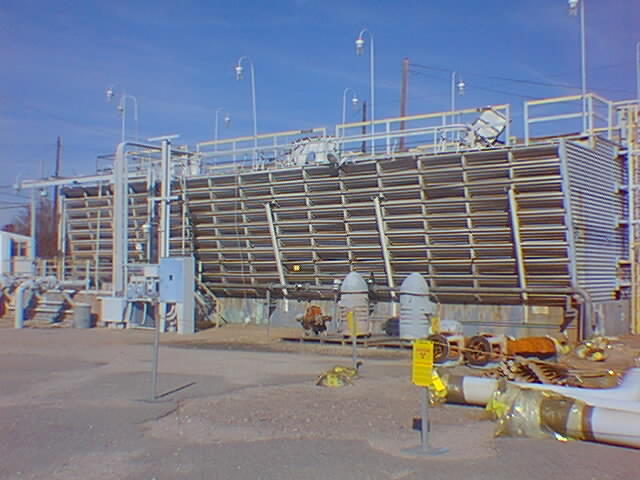
The Analytical Development Section of Savannah River Technology Center (SRTC) was requested by the Facility Disposition Division (FDD) to conduct in-situ gamma-ray pulse height analysis measurements to provide input toward the decision to unconditionally release the 285-3H cooling tower. The 285-3H is a three-cell-cooling tower used to support H Area Operations and specifically Tritium. A new cooling tower (218-2H) was constructed in Tritium as part of a project to upgrade the HVAC system. Figure 1 shows a photograph of this cooling tower. When this was completed, the need for additional cooling water for process reasons was greatly reduced. The 285-3H Tower was constructed in 1968 and shutdown in late 1998 as a result of lower demands. The 285-3H cooling tower structure measures 28 ft. x 74 ft. for approximately 2072 ft2.
The cooling tower structure is prioritized in the top ten for risk ranking of inactive facilities. During an inspection in May 2000, the general condition of the structure was categorized as condition Code S (No Value Except for Its Basic Material Content). The inspection also noted that the structure is deteriorating, and the amount of wood present in the tower presents a fire potential.1
During a survey by Radiation Control Operation (RCO), beta-gamma contamination of the associated piping of the cooling tower was detected. Although the majority of associated cooling water piping probed 10,000 dpm beta-gamma, one elbow probed 25,000 dpm beta-gamma. FDD wanted to confirm that the cooling tower has no process-related contaminants prior to its unconditional release. The plan is to use the history of the units, data from RCO survey of the associated piping, g-PHA, and a sample plan to unconditionally release the cooling tower. The g-PHA measurements’ main goals are to confirm that there are no process-related contaminants present on the associated piping of the cooling tower and to determine if the beta-gamma is from naturally-occurring radioactive materials (NORMS).
FDD’s decision to treat the cooling tower and its associated piping as not contaminated with process-related contaminants will realize a considerable cost savings by not sending the components to the low-level burial site. In addition, WSRC Management Policy requires evaluation of treatment and disposal options that consider waste disposal, costs, and risks to dispose of large pieces of equipment rather than the burial option.2
Figure 1. Photograph of the 285-3H Cooling Tower
Experimental
To accomplish the measurements, we have acquired two g-ray pulse height analysis spectra and a background g-ray spectrum near the cooling tower. All acquisitions were made using a portable HPGe detector and EG&G Dart system that contains a high voltage power supply and signal processing electronics. A personal computer with Gamma-Vision software was used to control the Dart MCA and provide space to store and manipulate multiple 4096-channel g-ray spectra.3 We used a liquid-nitrogen-cooled portable germanium detection system that is described in Technical Report WSRC-TR-2000-00317.3 For all of the components we acquired holdup spectra in the close-field configuration as shown in Figure 2. We acquired spectra with the detector approximately 5 inches away from the object. At that range we could not observe all of the component, however we were able to obtain close coupled spectra from the points designated by RCO inspection as high in b-g activity. We believed that a diagnosis of the observed activity as naturally occurring radioactive material (NORM) would be sufficient to declare the complete batch of cooling tower components as free of process radioactivity. This reasoning is supported strongly by the RCO inspections and by the process knowledge of the tower components. SRS has used very similar reasoning to free release three water chiller units.4,5 These acquisitions and the interpretations of the data are very similar to those of references 4, 5, and 6.
We obtained a local background spectrum with the detector isolated from the tower components. This background is shown in Figure 4. The spectrum shows several naturally-occurring g-ray peaks that are labeled on it. The background g-ray activity is composed of natural activity from 232Th daughters and natural 238U daughters with no contributions from 137Cs or 60Co. Using the peaks from the natural background, we were able to energy calibrate the detection system.
In both of the close-coupled component spectra we observed background activity only. Example spectra are shown in Figures 5 and 6. The count times were 598 seconds and 620 seconds. Note no process-related activity is observed in either spectrum. The photopeak areas where 137Cs and 60Co would appear on the two spectra are designated, and it is clear that neither of these two common process-related species contribute to the spectra. Therefore in no case was it necessary to calculate measured activity from our close-coupled configuration. It is necessary only to determine limits of detection for those nuclides that are process related.
Results
The Table lists the measured counts for three of the naturally occurring gamma ray transitions (238.6 212Pb, 510.6 208Tl, and 911.2 228Ac). It also lists the process related gamma rays (185.6 235U, 661.7 137Cs, and 1173.2 60Co). These gamma rays are the most likely to be observed at the Savannah River Site. We can determine the lower limits of detection (LLD) for each of the three process related g-rays from the background spectrum acquired. The LLD in units of cps is determined from
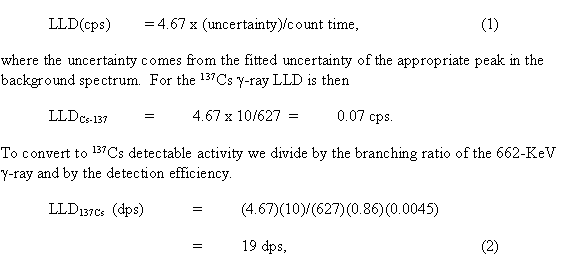
where 0.86 is the branching ratio, and 0.0045 is our measured close-coupled detection efficiency. The latter was determined experimentally in reference 5 and is in good agreement with the vendor’s specifications7 and with our previous efficiency calibration measurements.8
The value of 19 dps is equal to 0.5 nCi, and we have used this value as our
limit of detection for 137Cs in these measurements. Using estimated
detection efficiencies of 0.0123 for the 235U transition at 186 KeV
and 0.0027 for the 60Co transition at 1173 KeV, we have determined
limits of detection of 1 nCi for 235U and for 60Co.
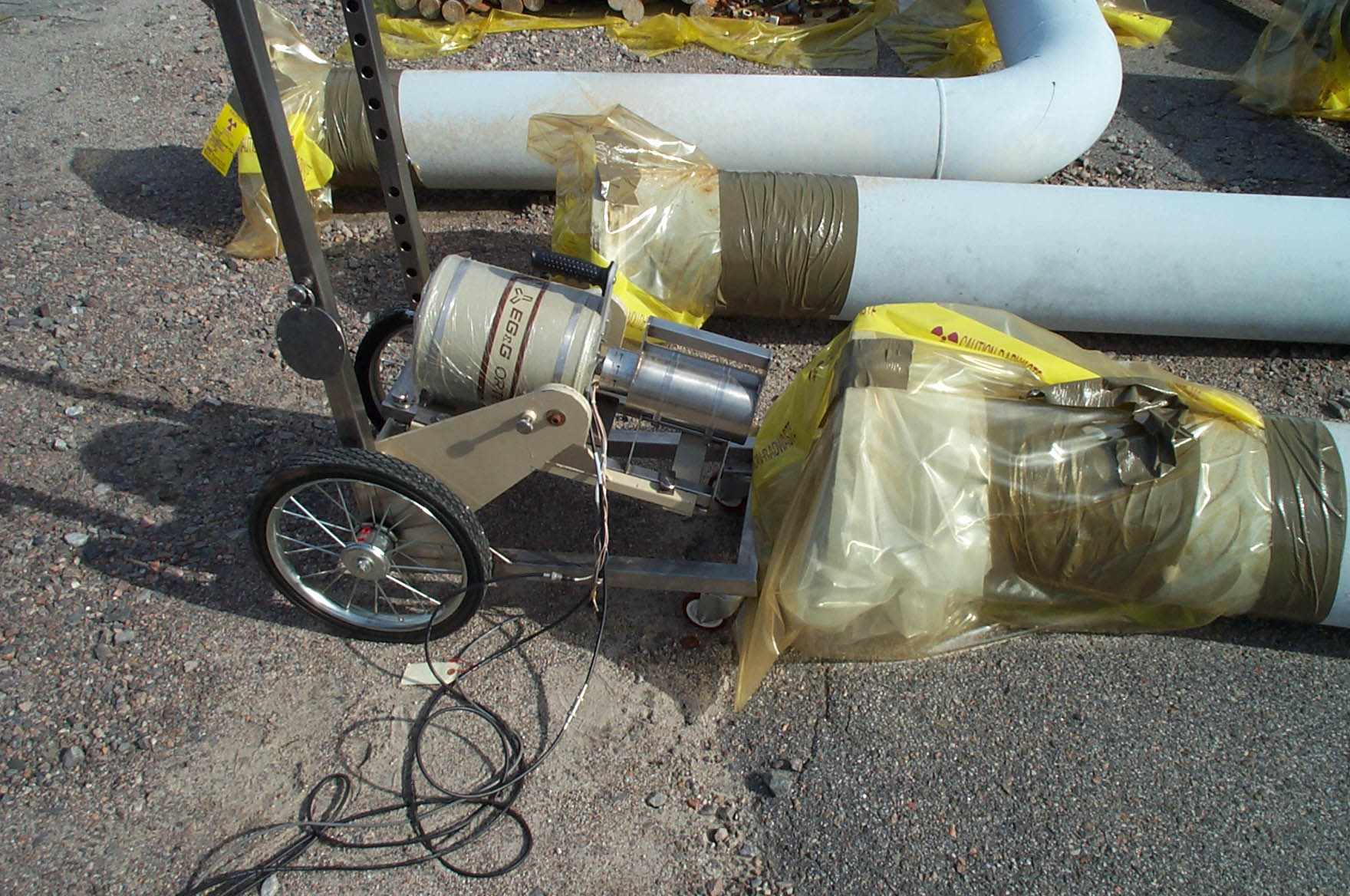
Figure 2. Photograph of a Close-Coupled Measurement of one of the Cooling Tower Components
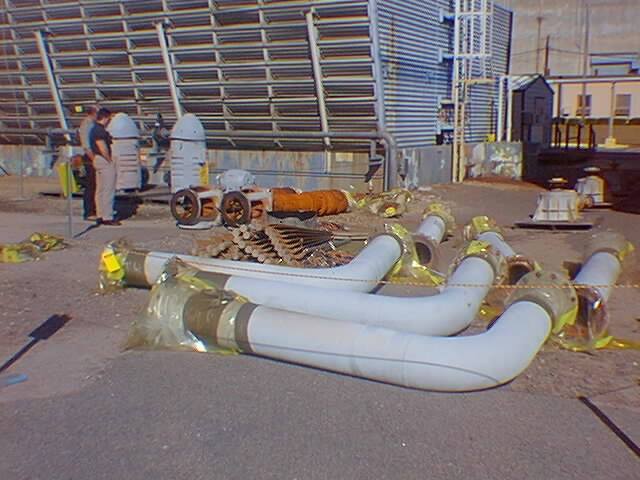
Figure 3. Photograph of the Piping Associated with the Cooling Tower
Observing the data of the table and comparing the spectra of Figures 4 – 6
it is evident that the naturally occurring radioactivity from 212Pb,
208Tl, and 228Ac are above the background rate. By some
mechanism these three species as well as other NORMS are present at enhanced
levels on the cooling tower components. We have consistently observed this phenomenon
is our g-PHA observations on SRS water chiller components
and on SRS reactor building trolleys.(4-6) Two mechanisms to explain
these observations would be from use of Pb-based paint and as Th daughter products
from welding activities. In previous measurements, and with several additional
experimental tests on the reactor trolleys, we have been unable to confirm the
source of enhanced NORMS on these components
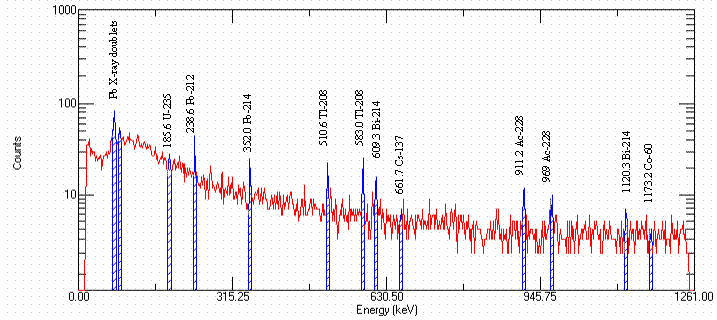
Figure 4. Spectrum of the background taken on 1/11/01
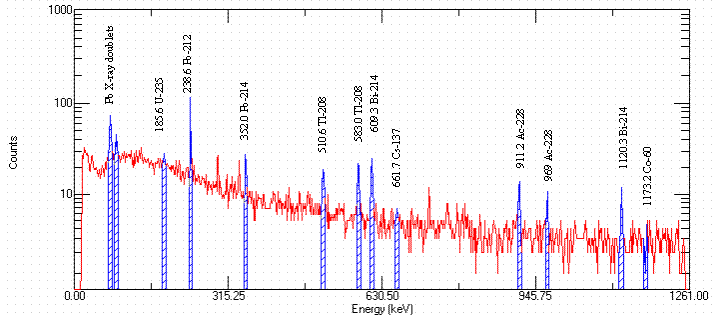
Figure 5. Close Field Spectrum of the Tower Piping
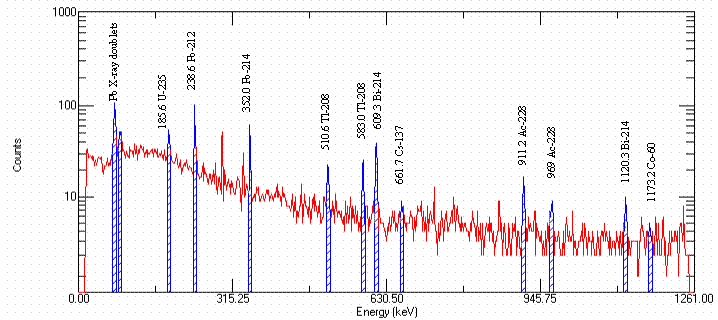
Figure 6. Close Field Spectrum of the Tower 2 Piping
Table 1. A List of Data Collected for The Associated Piping
|
Sample Number |
186 KeV U-235 Area |
238 KeV Pb 212 Area |
511 KeV Tl 208 Area |
662 KeV Cs 137 Area |
911 KeV Ac 228 Area |
1173 KeV Co 60 Area |
Count Time (sec) |
|
1/11/01Bkg |
82± 29 |
104± 35 |
57± 16 |
35± 10 |
59± 14 |
8± 14 |
627 |
|
Tower |
62± 34 |
385± 41 |
122± 22 |
39± 15 |
85± 14 |
-13± 11 |
598 |
|
Tower 2 |
144± 136 |
497± 45 |
157± 22 |
22± 13 |
67± 16 |
3± 12 |
620 |
Conclusion
ADS researchers have acquired two close coupled g-PHA spectra from the 285-3H cooling tower components. The acquisitions were obtained with a high purity, high-resolution germanium detector system from the two spots designated by RCO as highest in observed b-g activity. In both of the spectra obtained we observed multiple g-rays that come from the naturally occurring decay chains of 238U and 232Th. No process-related g-rays were observed. We were especially attentive toward process contamination from 235U, 137Cs, and 60Co, and we have set upper limits of content of 1 nCi total activity from each of these three species in both items. The entire batch of tower components can be eligible for free release based on the results of this report, RCO survey, and the results of the sampling plan.
References