WSRC-MS-2000-00168
Inhibition by Gaseous Impurities of Hydrogen Absorption by Pd
and Internally Oxidized Pd-Al Alloys
Ted B. Flanagan and D. Wang
Chemistry Department
University of Vermont
Burlington, VT 05405
K. L. Shanahan
Westinghouse Savannah River Company
Aiken, SC 29808
This document was prepared in conjunction with work accomplished
under Contract No. DE-AC09-96SR18500 with the U.S. Department of Energy.
DISCLAIMER
This report was prepared as an account of work
sponsored by an agency of the United States Government. Neither the United States
Government nor any agency thereof, nor any of their employees, makes any warranty,
express or implied, or assumes any legal liability or responsibility for the
accuracy, completeness, or usefulness of any information, apparatus, product
or process disclosed, or represents that its use would not infringe privately
owned rights. Reference herein to any specific commercial product, process or
service by trade name, trademark, manufacturer, or otherwise does not necessarily
constitute or imply its endorsement, recommendation, or favoring by the United
States Government or any agency thereof. The views and opinions of authors expressed
herein do not necessarily state or reflect those of the United States Government
or any agency thereof.
This report has been reproduced directly from
the best available copy.
Available for sale to the public, in paper, from:
U.S. Department of Commerce, National Technical Information Service, 5285
Port Royal Road, Springfield, VA 22161, phone: (800) 553-6847, fax:
(703) 605-6900, email: orders@ntis.fedworld.gov online
ordering: http://www.ntis.gov/support/ordering.htm
Available electronically at http://www.osti.gov/bridge/
Available for a processing fee to U.S. Department
of Energy and its contractors, in paper, from: U.S. Department of Energy, Office
of Scientific and Technical Information, P.O. Box 62, Oak Ridge, TN 37831-0062,
phone: (865 ) 576-8401, fax: (865) 576-5728, email: reports@adonis.osti.gov
Abstract
The absorption of H2 by Pd is a sensitive tool for the study of the effects of impurity gases on H2 chemisorption because chemisorption is a necessary intermediate for the absorption of hydrogen. Since large amounts of hydrogen are absorbed by Pd at equilibrium, its absorption is readily followed experimentally. Inhibition of H2 absorption by Pd foil by He, CO2, and CO occurs in the order of increasing inhibition He:CO2:CO.
Surprisingly CO was not as strong a poison for H2 chemisorption as anticipated. The effect of pre-adsorption followed by evacuation of CO at 323 K did not affect the subsequent rates of H2 absorption nearly as much as absorption from (CO + H2) mixtures. For Pd foil the simultaneous presence of H2 and CO lead to inconveniently slow rates but for high surface area Pd such as Pd-on-kieselguhr or Pd powder, the rates were not inconveniently slow for absorption from (H2 + CO) mixtures.
After internal oxidation, Pd-Al alloys are converted into composites of alumina precipitates within Pd matrices. The rates of H2 absorption have been shown to be faster for these composites than for Pd foil. In the presence of He or CO2 the rates of H2 absorption are fast enough to obtain equilibrium within reasonable times. The rates are also much faster for the composites than for pure Pd and the rates increase with %Al in the alloy.
Introduction
It is well-known that Pd absorbs large amounts of hydrogen [1]. H2 enters into Pd in its dissociated form as shown by its adherence to Sieverts' law, i.e., (H/Pd)=r= Ks* pH2 1/2, at low H contents. This law corresponds to the equilibrium: (1/2)H2(g) = [H]abs. The absorption of hydrogen via H2 requires the dissociative chemisorption of H2 as a necessary precursor step in the equilibrium between gaseous H2 and H dissolved within the Pd.
At low contents H dissolves in the dilute, α, phase until a composition is reached where the hydride phase forms, e.g., r=0.011 at 300 K [2]. The dilute and hydride phases co-exist until the hydride phase is completely formed at r=0.58 (300 K). While both phases co-bexist, the pH2 must be invariant according to the phase rule; this invariant pH2 is described as the plateau pressure.
Rates of H2 absorption by Pd will be determined after dilution of H2 with each of the following impurity gases: He, CO2 and CO and also after pre-adsorption of CO. It is known that the presence of He severely inhibits the absorption of H2 by activated LaNi5 [3], which is referred to as a ``blanketing effect" and is due to blocking the access of H2 to pores and cracks by He. Presumably He(g) will not inhibit a hydrogen-absorbing solid which is relatively crack and pore-free. CO2 is not chemisorbed on Pd but its physical adsorption may partially block the surface for H2 chemisorption.
In a review of the co-adsorption of gases by metals, White and Akhter [4] state
that "saturation CO coverages usually poison the surface for H2
dissociative adsorption", however, as a possible exception, they pointed out
that Conrad, et al [5] find evidence for H2 dissociation on
the (110) face even at a high CO precoverage. In the research of Conrad, et
al the precoverage of the surface by CO was only one third of its maximum
value [5] and different conclusions may have been reached if the coverage was
greater, e.g., Conrad, et al [6] found that "at a coverage of  no hydrogen absorption takes place whereas the surface is only 50% saturated
with respect to CO adsorption." They also noted that CO will displace adsorbed
H but H will not displace adsorbed CO. In his recent book Somorjai [7] reproduces
the heat of chemisorption of CO on Pd(111)
as a function of coverage from [6] and at
no hydrogen absorption takes place whereas the surface is only 50% saturated
with respect to CO adsorption." They also noted that CO will displace adsorbed
H but H will not displace adsorbed CO. In his recent book Somorjai [7] reproduces
the heat of chemisorption of CO on Pd(111)
as a function of coverage from [6] and at  the heat is about 73.5 kJ/
mol H and is, more or less, constant until about
when it starts to fall steadily reaching about 10.4 kJ/ mol H at
the heat is about 73.5 kJ/
mol H and is, more or less, constant until about
when it starts to fall steadily reaching about 10.4 kJ/ mol H at  ~0.8.
Huber [8] found that CO severely blocks the passage of H through a Pd permeation
membrane even though the membrane had been coated with Pd black. For the isotopic
exchange of H2 with PdDx (300 K) or vice versa it was found
that the rate of exchange fell to zero when 300 Pa CO was mixed with 170 kPa
H2 over a coarse PdDx powder [9]. It seems from these
references that CO should completely block H2 chemisorption and consequently
its absorption by Pd.
~0.8.
Huber [8] found that CO severely blocks the passage of H through a Pd permeation
membrane even though the membrane had been coated with Pd black. For the isotopic
exchange of H2 with PdDx (300 K) or vice versa it was found
that the rate of exchange fell to zero when 300 Pa CO was mixed with 170 kPa
H2 over a coarse PdDx powder [9]. It seems from these
references that CO should completely block H2 chemisorption and consequently
its absorption by Pd.
Internal oxidation of an alloy such as Pd-Al* consists of oxidizing the more readily oxidizable solute metal to form small oxide precipitates within the solvent metal [10, 11]. In order to relieve internal stress caused by the expansion of the oxide precipitates during internal oxidation, the matrix metal atoms must be transported from the interfacial region to the surface and simultaneously there must be a counterflow of vacancies from the surface to the interface [12]. Evidence for this transport is the appearance of nodules of the matrix metal on the surface with a total volume closely equal to that caused by the expansion due to the growing oxide precipitate [12, 13].
It has been found that after internal oxidation of a Pd-Al alloy foil, the kinetics of H2 absorption are greatly accelerated as compared to Pd foil [14, 15, 16]. It is of interest to determine whether a Pd/alumina composite will be affected by the above impurity gases to the same extent as pure Pd foil. Besides Pd foil, the effect of CO(g) on the poisoning of H2 absorption will be determined for ~50 weight % Pd supported on kieselguhr, Pd/k, and Pd powder.
It should be emphasized that the absorption of H2 is a sensitive and unique technique for the determination of the effect of these impurity gases on the dissociative chemisorption of H2 by Pd. The amounts of absorbed hydrogen are many orders of magnitude greater than the amounts of chemisorbed hydrogen and therefore it is a much more sensitive monitor of the occurrence of chemisorption than decreases in pH2(g) which must be employed to follow chemisorption for non-H2 absorbing metals (at moderate pH2 ) such as Pt or Ni.
Experimental
Internal oxidation of Pd-Al alloys was carried out in a tube furnace (Lindberg) in the laboratory atmosphere which is the same procedure as employed elsewhere, e.g., [14]. The percentage internal oxidation was determined from the weight gain which generally yielded reasonable results and indicated complete oxidation of Al to Al2O3 after 72 h (1073 K) or 24 h (1273 K). From BET measurements (Kr), the Pd on kieselguhr (Pd/k) was found to have a surface area of 2.7 m2/g and the Pd powder 1.0 m2/g.
All isotherms were measured in metal systems using electronic pressure gauges covering different ranges of pressure. For the rate measurements in the simultaneous presence of H2 and the impurity gas, the latter was introduced into the dosing volume followed by about 33.3 kPa of H2.
Results and Discussion
In the following, relations between pH2 and time will be referred to as kinetics (or rates) of H2 absorption. The driving force for this heterogeneous reaction depends on ln[pH2] and therefore continually changes during the course of the reaction [17]. If the motive of the study were to obtain fundamental kinetics, it would be more suitable to carry out the reaction at a constant driving force during reaction using, e.g., a gravimetric method. The goal of the research is to compare rates of H2 absorption with and without gaseous impurities, and not to obtain a rate law and deduce a mechanism for the reaction and therefore the pH2-time method is both satisfactory and convenient. Most, but not all, of the rate measurements are made along the plateau region. The constant plateau pH2 is convenient because the initial driving forces will be the same if the same initial pH2 is employed.
Kinetics of Hydrogen Absorption by Pd Foil in the Presence of Helium, CO2,
or CO.
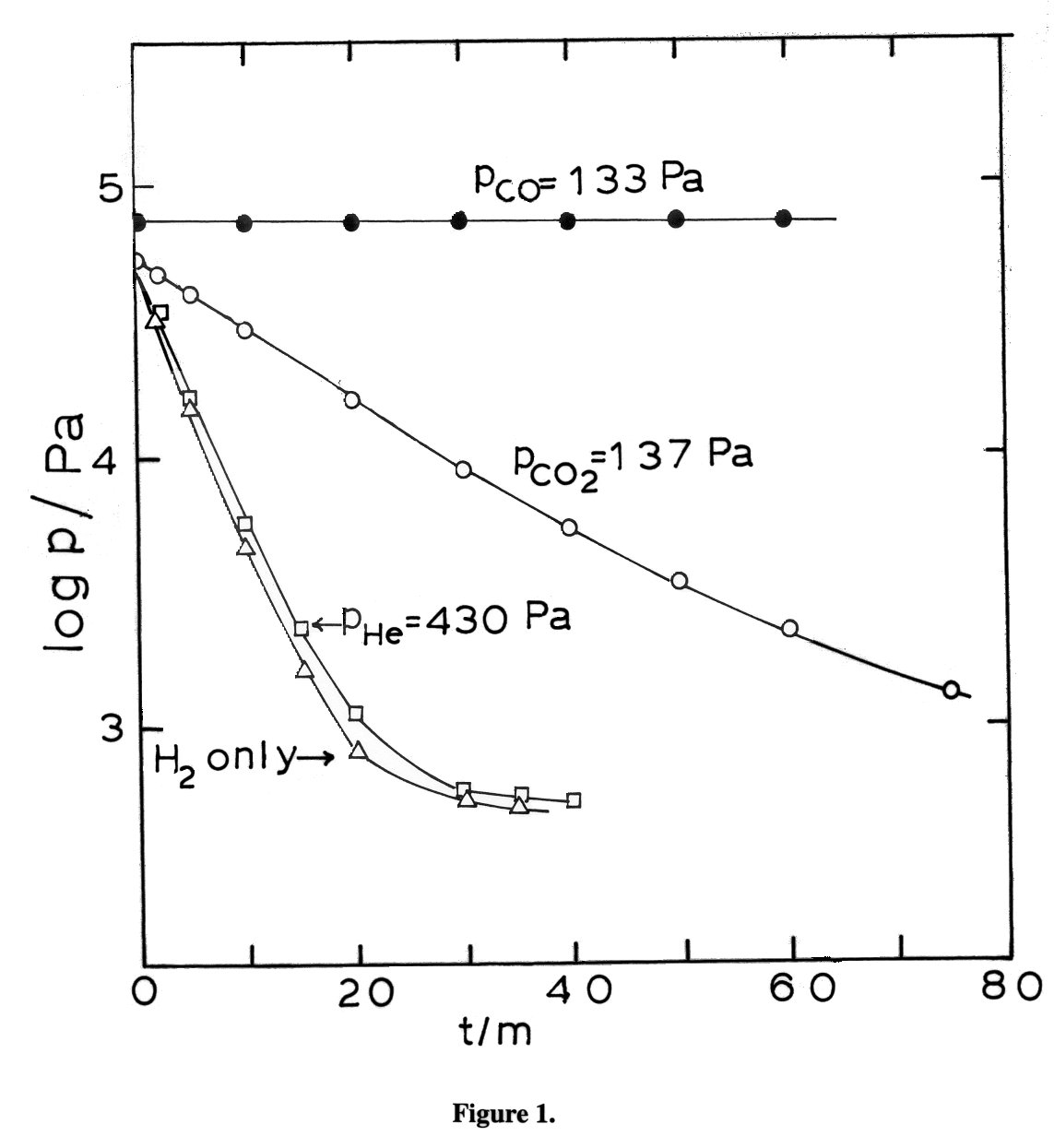
Figure 1 shows the absorption of H2 (273 K) by Pd foil along the plateau region in the presence and absence of impurity gases. It can be seen that the simultaneous presence of He(g, 0.42 kPa) with H2 does not markedly affect the kinetics of H2 absorption while the presence of CO2(g, 0.13 kPa) with H2 slows down the rate significantly. This is in the order which might be expected. CO2(g) is not a permanent poison because after Pd is exposed to CO2 and evacuated, the rates of uptake were the same as those before the exposure. It is a mild, reversible inhibitor of the H2 chemisorption.
By contrast with He or CO2, there is significant poisoning in the case of simultaneous presence of H2 + CO(g, 0.13 kPa) (Fig. 1). After exposure of Pd to CO, and evacuation at 323 K, a significant inhibitory effect remains. Thus CO is a non-reversible inhibitor of H2 chemisorption by Pd at 323 K.
Kinetics of Hydrogen Absorption by Internally Oxidized Pd0.955Al0.045 Alloys in the Presence of Helium or CO2
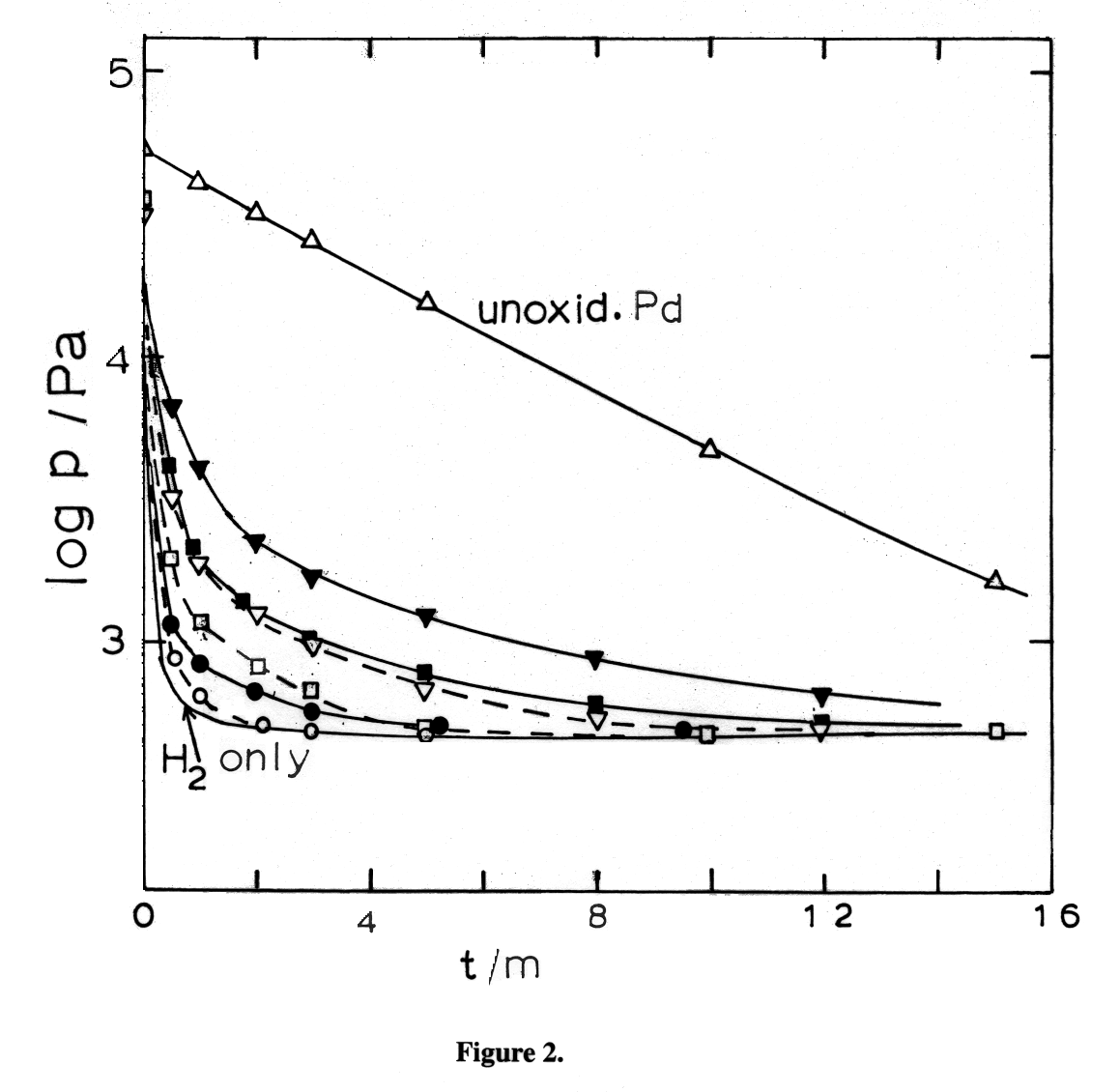
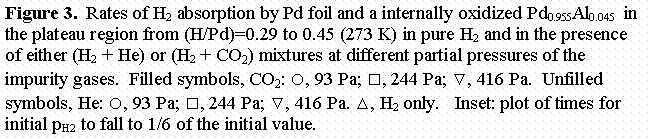
Figure 2 shows the separate effects of He and CO2 at different partial pressures on the rates of hydrogen absorption by the internally oxidized Pd0.955Al0.045 alloy for a change in H content from r=0.14 to 0.28 along the plateau (273 K). The partial pressures employed for both impurity gases were 0.09 kPa, 0.24 kPa and 0.41 kPa while the initial pH2 was 33.3 kPa. The effect of He is seen to be significant at pHe=0.41 kPa in contrast its affect on Pd foil for a similar pHe (Fig. 1). This difference shows that pores and microcracks are important pathways for H2 absorption by the internally oxidized Pd0.955Al0.045 alloy [15] but not for Pd foil. There is also a significant inhibition due to CO2, e.g., the times for the initial pH2 to fall to a tenth of its starting value are 6 s and 30 s in the absence and in the presence of 0.24 kPa of CO2, respectively (Fig. 2 ). Similar results were obtained for rate determinations over the second half of the plateau from (H/Pd)=0.29 to 0.45 as shown in Figure 3. There is a nearly linear decrease of rate of H2 absorption with the partial pressures of CO2 and He (inset, Figure 3).
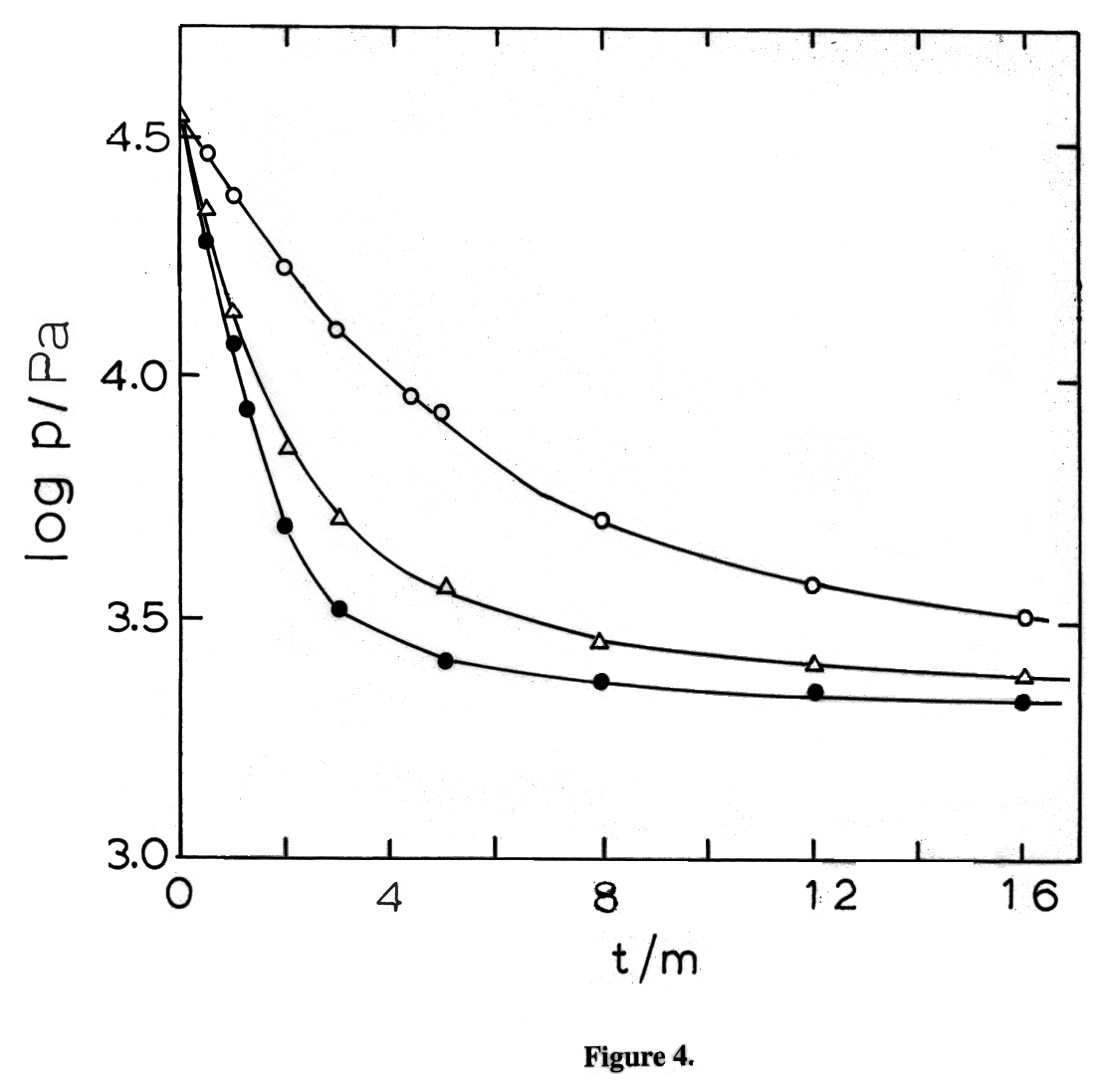
It was of interest to learn whether partial internal oxidation offers resistance to inhibition of H2 absorption by He or CO2. Partial internal oxidation has been shown to enhance the kinetics of H2 absorption [16] as compared to Pd. A Pd0.955Al0.045 alloy was internally oxidized at 873 K to 7% completion. It is known from experiment, and also predicted from theory, that an internal oxidation zone penetrates from the outside into the bulk of the alloy during internal oxidation and therefore a partially internally oxidized alloy consists of an internally oxidized layer enclosing the inner unoxidized alloy.
The rate measurement results are shown in Figure 4 where it is clear that they are slower than for the completely internally oxidized alloy (Figs. 2, 3) but faster than found for the unoxidized alloy or Pd. Similar results for the rates were found for a Pd0.955Al0.045 alloy that had been internally oxidized (873 K) to 6%.
The ratio of the rates (273 K) of H2 absorption in the presence (pHe=240 Pa and 410 Pa for the alloys and Pd, respectively) and absence of He are 0.9, 0.5 and ~0.3 for Pd, a partially (7%) internally oxidized Pd0.955Al0.045 alloy and a completely internally oxidized Pd0.955Al0.045 alloy, respectively. This shows that the role of microcracks and pores is greatest for the completely internally oxidized alloy. It also shows that the bulk of the internally oxidized alloy must be active for H2 absorption otherwise the partially and completely internally oxidized alloys would have similar ratios.
On the other hand, the ratios for CO2 inhibition for Pd, the partially internally oxidized and the completely internally oxidized Pd0.955Al0.045 alloy are all about the same indicating that CO2 does not block pores nearly as effectively as He and its inhibition results from physisorption on the exterior surface. The molecular diameter of CO2 is 1.7x that of H2 based on gas viscosity measurements and perhaps this plays a role.
Effect of CO on H2 Absorption by Pd/Alumina Composites, Pd/k and Pd Powder
Before the kinetic results are given, the surface areas of the various samples will be discussed. The amounts of CO(g) which are adsorbed by the various samples are given in Table 1. Surface area estimates given in Table 1 are based on moles of CO adsorbed using the approximation that there are 1015 Pd sites per cm2. In addition, some surface areas were determined more accurately by BET measurements using Kr. It can be seen in Table 1 that while the agreement between the two methods is only approximate, the same trends are observed.
Table 1. Amounts of CO Adsorbed (323 K) by Several Forms of Pd (Cycled) and Internally Oxidized Pd-Al Alloys
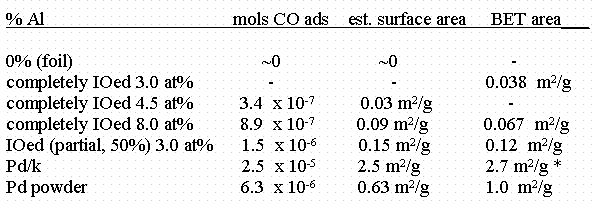
where IOed indicates internally oxidized and * refers to the area of a similar Pd/k sample.
The internally oxidized alloys and Pd have all been cycled at 323 K, i.e., hydrided and dehydrided, before the surface area measurements were carried out. The results (Table 1) show that the area of the cycled, internally oxidized Pd0.92Al0.08 alloy is about 1.7x that of the cycled, internally oxidized Pd0.97Al0.03 alloy where both have been internally oxidized at 1073 K. Table 1 also shows that the partially (almost 50%) oxidized Pd0.97Al0.03 alloy has a larger surface area than the Pd-Al alloys fully internally oxidized at 1073 K due, presumably, to the lower oxidation temperature used for the former, 873 K. Smaller precipitates form at lower internal oxidation temperatures and the smaller precipitates may cause a larger surface area to form during cycling. It was found that grinding the cycled Pd0.97Al0.03 alloy did not affect its surface area which means that the internal surface is mainly accessible to H2 via grain boundaries and microcracks.
Kinetics of H2 Absorption in the Presence of Pre-adsorbed CO.
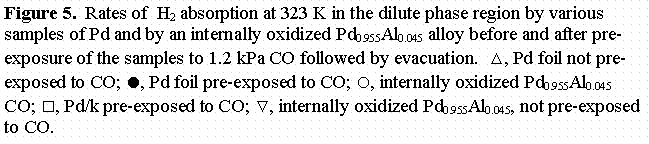
As noted in the Introduction, previous research would suggest that CO(g) should be an effective poison for H2 absorption by Pd. In the first group of experiments CO(g) was pre-adsorbed at a pressure of 1.2 kPa (323 K) and then the sample was evacuated at 323 K for several hours. The rates of absorption of H2 by Pd were then determined from pH2-time relations.
Rate measurements for H2 absorption were made in the dilute phase (Fig. 5 ) at 323 K before and after pre-exposure to CO at 323 K. Measurements were made using pure Pd foil, an internally oxidized Pd0.955Al0.045 alloy, Pd black and Pd/k. The rate of H2 absorption by Pd foil is rather slow before exposure and, after the exposure to CO(g), it becomes inconveniently slow for any studies of absorption although it is not completely poisoned as might have been expected from the literature. For the internally oxidized Pd0.955Al0.045 alloy, the rates after pre-exposure to CO are still fast enough so that H2 absorption isotherm measurements are still quite possible at 273 K. Rates for the Pd/k sample after pre-adsorption of CO are still quite fast. Similar measurements were made for Pd powder which behaved comparably to the Pd/k sample (Fig. 5). Generally these results were surprising because it was expected that pre-adsorption of CO would completely poison H2 chemisorption and consequently H2 absorption would not occur.
A Pd0.97Al0.03 alloy was internally oxidized at 873 K for 24 days which corresponded to about 50% internal oxidation; this low temperature oxidation results in very finely divided precipitates. This alloy was exposed to 267 Pa CO at 323 K and then it was evacuated and the subsequent rate of H2 absorption was measured. The alloy was then exposed to CO (267 Pa) at 473 K, evacuated and the rate of H2 absorption at 323 K was found to be faster than the previous one exposed to CO at 323 K. Exposure to CO at 573 K gave even faster kinetics of subsequent H2 absorption at 323 K. Thus the poisoning by CO is somewhat less after exposure and evacuation of CO at elevated temperatures than after exposure and evacuation at 323 K.
Kinetics of Hydrogen Absorption by Pd and Internally Oxidized Pd-Al Alloys from (H2 + CO) Mixtures
In these experiments rates of H2 absorption from H2 + CO mixtures have been measured for Pd and internally oxidized Pd-Al alloys. The effect of %Al in the Pd-Al alloys, which have been completely internally oxidized (at 1073 or 1273 K), on the rates of H2 absorption were determined. The pH2-time relations were measured for H2 absorption in the presence of 0.27 kPa CO(g) and pH2=33.3 kPa at 323 K. These rate determinations were carried out in the plateau, two phase region and are plotted directly as pH2 against time in Figure 6. Although it still absorbs H2 in the presence of CO(g), it can be seen that the rate of H2 absorption by pure foil Pd (323 K) is quite slow, however, as noted for the effects of pre-adsorbed CO, it is surprising that H2 continues to be absorbed in the presence of the CO(g).
Rates were then examined for a series of completely internally oxidized Pd-Al alloys (Fig. 6) and there is seen to be a steady increase of rates with %Al as shown by the inset in Figure 6. All of these alloys had been cycled and ground except for the 8 at% alloy which was cycled only, however, it has been found that grinding does not significantly affect the surface area and the rates before and after grinding in the absence of CO were found to be similar (273 K). The rates of H2 absorption in the absence CO(g) for these internally oxidized alloys were found to be the same (273 K) [16].
Figure 6 shows that the resistance to CO poisoning increases with increasing amounts of Al2O3 in the alloy. In the absence of CO(g) the rates of H2 absorption are nearly independent of %Al [16]. This may be due to the fact that the rates are controlled by heat transfer and such a non-chemical rate controlling step would lead to all of the internally oxidized Pd-Al alloys having the same rate. Heat transfer becomes the slow step in hydriding when the heat of H2 absorption is quite exothermic and the reaction is very fast, because then the sample temperature can increase momentarily to values greater than the bath temperature, causing the plateau pressure to increase thereby reducing the driving force and decreasing the rate. When the rates are slowed by the chemisorption of CO, heat transport may no longer be the rate-limiting step, and a chemical step becomes rate-limiting which might be expected to depend on the %Al. This "new" rate-determining step would be expected to reflect the increase of surface area with %Al as indicated by the CO coverage and BET areas of the internally oxidized Pd0.955Al0.045 and Pd0.92Al0.08 alloys (Table 1). For example, if the slow step were to become a surface step, it would be proportional to the surface area and, according to Table 1, the surface area after cycling depends on the %Al in the alloy and the temperature of internal oxidation. Therefore it is possible that the apparent increase in resistance to poisoning may be partially due to the larger surface areas with increase of %Al. The surface areas of the internally oxidized Pd0.92Al0.08 and Pd0.97Al0.03 alloys are in the ratio of 1.7 but their rates are in the ratio of about 6 indicating that there is a factor in addition to the relative surface areas which enhances the rate with %alumina. Whatever the source of the resistance to poisoning it may prove to be useful to employ, e.g., partially internally oxidized Pd-Al alloys for membranes.
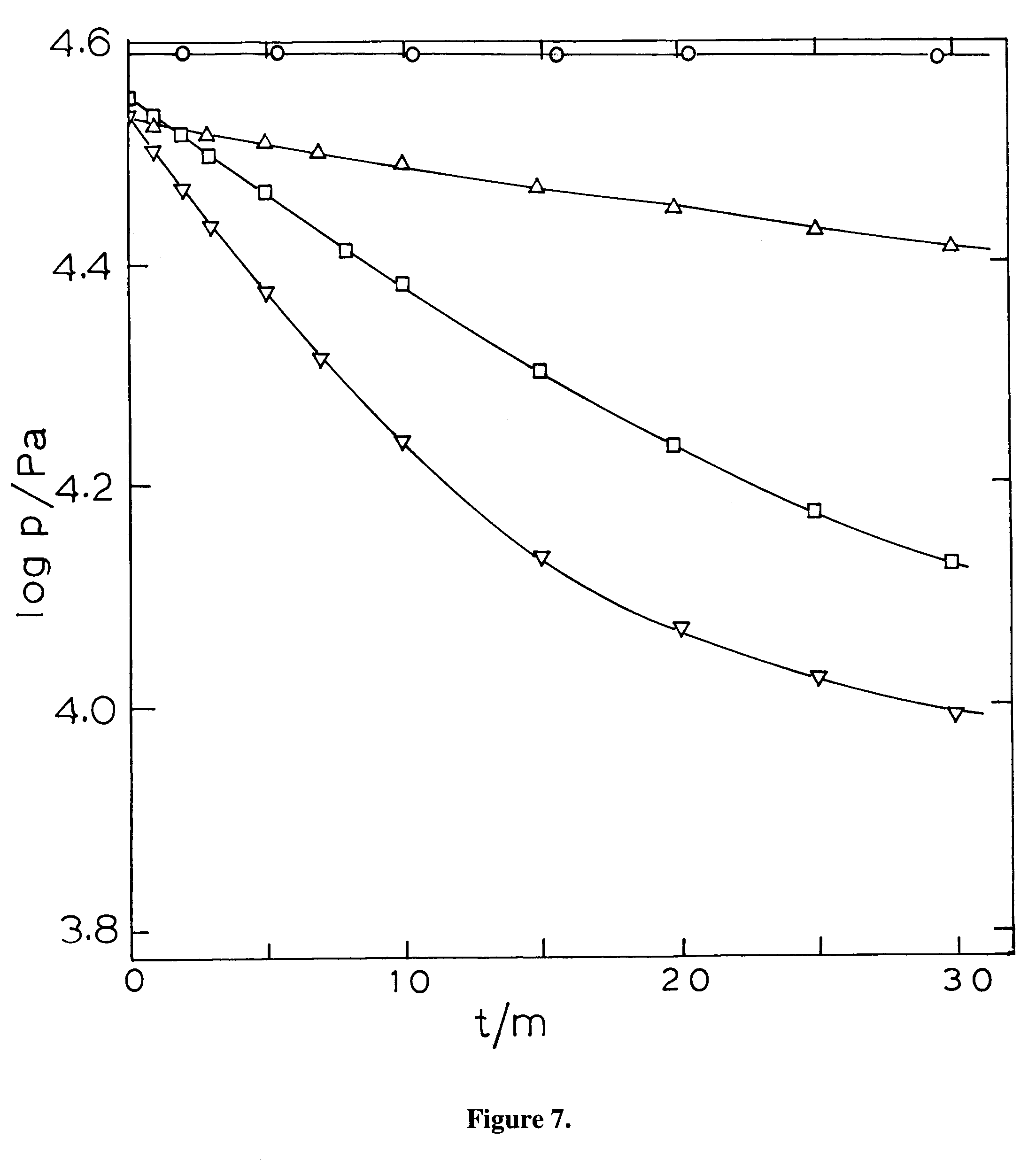
In order to obtain more insight into the resistance of CO inhibition of H2 absorption found for the internally oxidized Pd-Al alloys as compared to Pd foil, rate measurements were carried out using higher surface area Pd, i.e., Pd/k and Pd powder. The mass of Pd in each sample was about 0.6 g. Figure 7 shows the results of some experiments with these high surface Pd samples and it is clear that their rates have not decreased to nearly zero in the presence of CO(g) as did those for Pd foil. This constitutes further evidence that the resistance to CO poisoning by the internally oxidized alloys may therefore be simply due to their larger surface areas compared to unoxidized foils. It should be noted that the pCO which is employed is ample to cover the entire surface of either the Pd foil or the high surface area Pd samples, i.e., 0.27 kPa CO was present during the simultaneous (H2 + CO(g)) experiments for all of the samples.
From the BET measurements the surface area of the Pd/k was found to be 2.7 m2/g and the area of the internally oxidized Pd0.955Al0.045 alloy is 0.04 m2/g. If the rates of H2 absorption would be proportional to the Pd area, and the fraction of blocking by strong CO chemisorption is the same per unit surface of each, then the ratio of rates in the presence of CO would be proportional to the ratio of the surface areas, about 68:1 whereas the observed ratio of rates in the presence of CO is about 8:1 (Fig. 7). Similarly the ratio of the surfaces of Pd powder-to-internally oxidized Pd0.955Al0.045 alloy is about 15:1 and the ratio of rates is 4:1. This suggests that Pd surface area may not be the complete explanation of the CO resistance to inhibition. As indicated above, the presence of Pd in the internally oxidized alloys within a Pd/alumina composite may provide some additional protection against CO poisoning.
The Effect of the CO Partial Pressure on the Kinetics of H2 Absorption by an Internally Oxidized Pd-Al Alloy
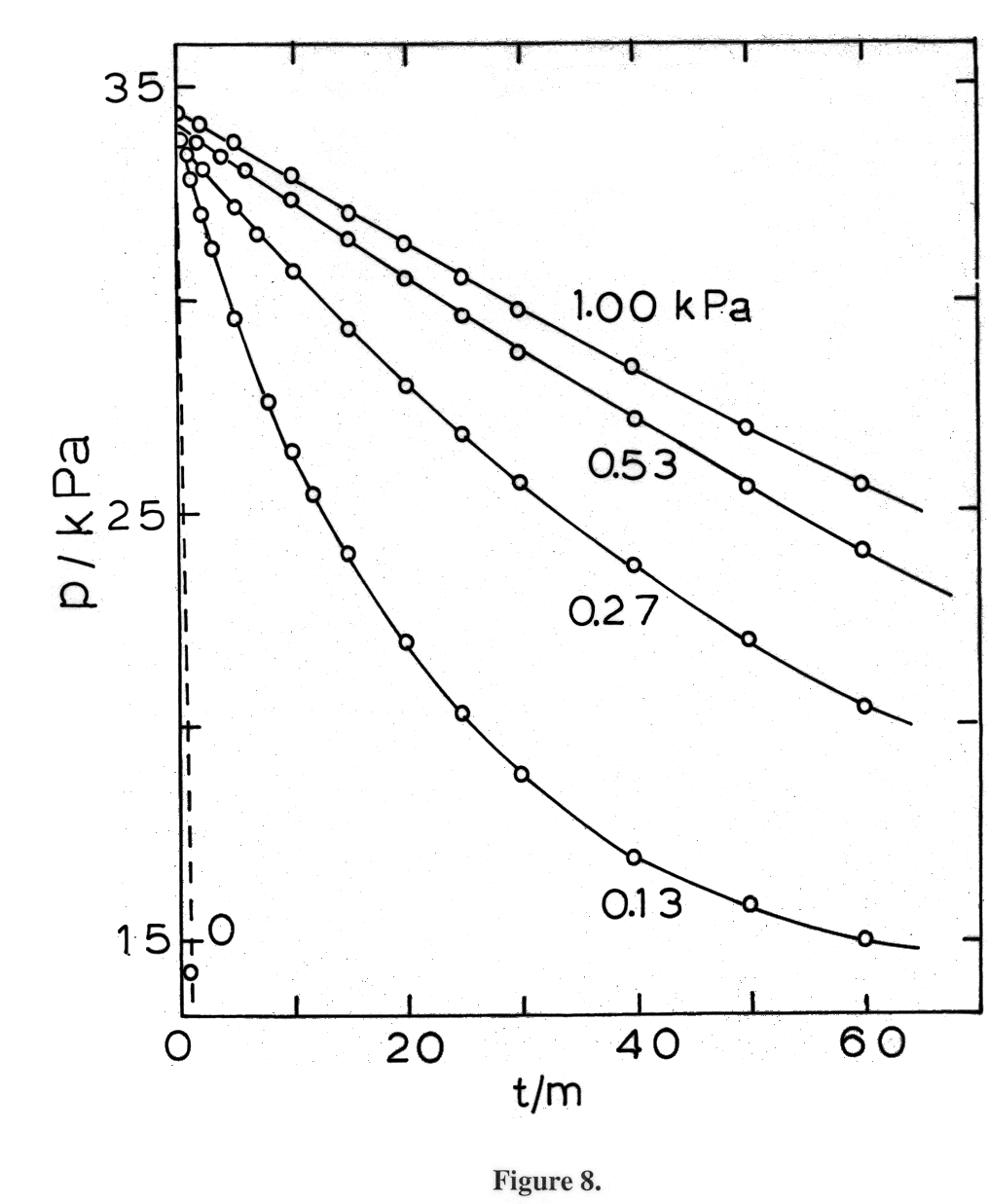
The effect of pCO on the rate of H2 absorption was determined using the internally oxidized Pd0.92Al0.08 alloy over the range of CO(g) partial pressures from zero to 1.07 kPa at a total pressure of (H2 + CO) of about 33.8 kPa (323 K). The variation in the driving force is negligible when pH2 varies from say 33.3 to 34.4 kPa for the different pCO employed. The rates decrease with increase of pCO but not linearly (Fig. 8). There is not much difference between pCO=0.53 or 1.07 kPa but a significant difference between 0.13 and 0.26 kPa. Recall that the inhibition of H2 absorption by CO2 or He was a near linear function of their partial pressures (Fig. 3). This difference in behavior confirms that CO(g) inhibits the reaction differently than the other two gases which is expected because it is chemisorbed.
It is clear that there are empty sites for H2 chemisorption at low pCO because otherwise the rates of H2 absorption would not be so fast. The rate of H2 absorption is proportional to the fraction of empty adjacent Pd sites suitable for H2 dissociation and subsequent transition to the absorbed state and this should be related to the CO(g) partial pressure through an appropriate isotherm for CO adsorption although a simple Langmuir isotherm does not describe the results.
Thermal Desorption of H2
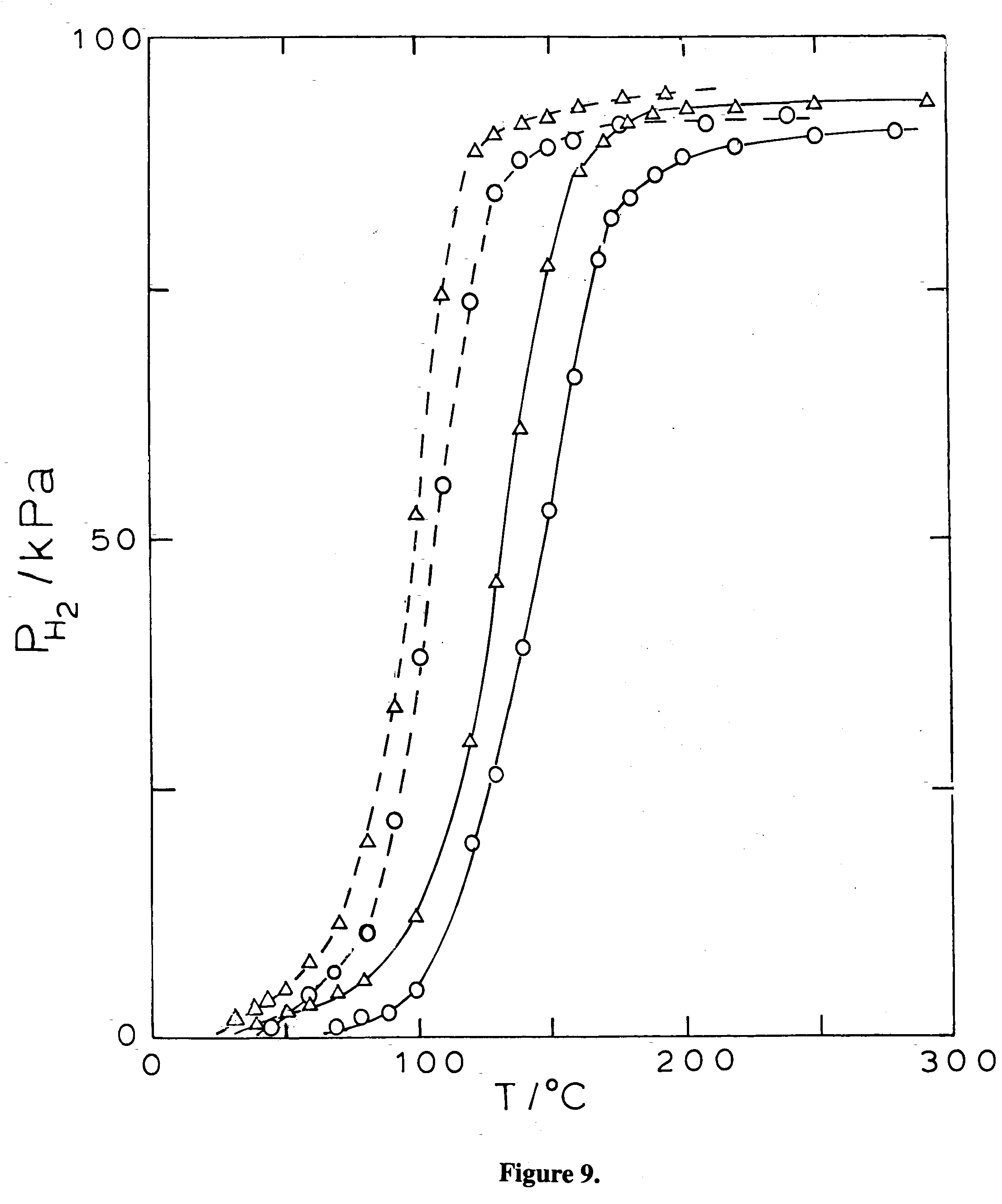
Pd and an internally oxidized and cycled Pd0.955Al0.045 alloy were allowed to absorb H2 to r~0.6. The resulting samples were then heated and the pH2 of the evolved H2 was recorded as a function of time and temperature. The temperature increase was not linear with time but it was the same for both samples. Results are shown in Figure 9 where the internally oxidized Pd0.955Al0.045 alloy commences to desorb H2 at a maximum rate at a lower temperature, 378 K, compared for Pd, 415 K.
The two samples were again allowed to absorb H2 to r~0.6 and then CO was introduced to the H2 above the samples so that pCO=267 Pa. The H-containing samples were again heated and total pressure recorded as a function of temperature. The results show that there is a greater inhibition by CO for the desorption of H2 by Pd than by the internally oxidized alloy (Fig. 9).
Possible Mechanisms for Inhibition Protection
The reasons for the inhibition of H2 absorption by CO2(g) and He(g) have already been discussed. It is interesting that there is no noticeable He(g) inhibition of H2 absorption by Pd foil but a significant effect for the internally oxidized Pd0.955Al0.045 alloy indicating that the latter has a microstructure such as pores which can be partially blocked by He(g).
The effect of CO(g) is clearly due to its chemisorption; it may block a certain fraction of the surface which is active for H2 absorption, e.g., 90%, which may be the same for each form of Pd. The rate of H2 absorption is slow for Pd foil because of its small surface area and the presence of CO slows it down by, e.g., 90%, causing it to be very slow. On the other hand, if the rates of the higher surface area Pd samples also decrease by 90%, their rates will still be appreciable. As discussed above there seems to be a factor in the internally oxidized Pd-Al alloys besides the surface area which causes resistance to CO poisoning.
Conclusions
The absorption of H2 by Pd is a sensitive tool for the study of the effects of impurity gases on H2 chemisorption because chemisorption is a necessary precursor for the absorption of hydrogen via H2(g). Since large amounts of hydrogen are absorbed by Pd at equilibrium, the course of absorption is easily followed experimentally making this is sensitive technique for the detection of the occurrence of chemisorption. It is found for Pd foil that the increase of inhibition of H2 absorption due to the presence of impurity gases is in the order of He:CO2:CO. There is no marked inhibition by He of H2 absorption by Pd foil whereas there is a significant effect for an activated intermetallic compound such as LaNi5 which is called "blanketing" [3]
CO(g) was not as strong a poison for H2 chemisorption as was anticipated. For Pd foil the simultaneous presence of H2 and CO(g) lead to inconveniently slow rates but for higher surface area Pd such as Pd on kieselguhr or Pd powder, the rates were not inconveniently slow after exposure to CO(g). Internally oxidized Pd/Al alloys are composites of alumina precipitates within a Pd matrix and thus H2 absorption is due to the essentially pure Pd matrix. The rates of H2 absorption have been shown to be faster for these than for Pd foil and they are also more resistant to inhibition by CO(g).
It appears that even when the strongly chemisorbed CO "covers" the surface, sites are still available for H2 chemisorption. Muschiol, et al [18] have suggested that H2 can dissociate by occupation of a subsurface site and an adjacent open surface site; this may be an important mechanism when the other surface sites are filled. This seems to be a reasonable mechanism and may explain why dissociation and absorption of H2 continue in the presence of CO.
* This widely used convention indicates that Pd is the majority element in the alloy.
Acknowledgements
The authors acknowledge Westinghouse Savannah River Corporation for partial financial support of this research. This work was supported under DOE contract Number DE-AC09-88SR18035. They are grateful to D. Blankenship for the surface area determinations.
References
- T. Flanagan, W. Oates, Ann. Rev. Mater. Sci., 21 (1991) 269.
- T. Kuji, W. Oates, B. Bowerman, T. Flanagan, J. Phys. F, 13 (1983) 1785.
- T. Tanaka, T. Flanagan, Catalysis (Japan), 22 (1980) 265.
- J. White S. Akhter, CRC Crit. Rev. Solid State Mat. Sci., 14 (1988) 131.
- H. Conrad, G. Ertl, E. Latta, J. Catalysis, 35 (1974) 363.
- H. Conrad, G. Ertl, J. Koch, E. Latta, Surface Sci., 43 (1974) 462.
- G. Somorjai, Surface Chemistry and Catalysis, J. Wiley, New York, 1994
- E. Wicke, H. Brodowsky, in Hydrogen in Metals, G. Alefeld, J. Volkl, eds., Springer Verlag, 1978, p. 139.
- D. Outka, G. Foltz, J. Catalysis, 130 (1991) 268.
- N. Birks, G. Meier, Introduction to High Temperature Oxidation of Metals, Edward Arnold, London, 1983.
- J. Meijering, in Advances in Materials Research, H. Herman, ed., Wiley, New York, vol. 5 (1971) p. 1.
- [J. Mackert, R. Ringle, C. Fairhurst, J. Dental Res., 62 (1983) 1229.
- S. Guruswamy, S. Park, J. Hirth, R. Rapp, Oxidation of Metals, 26 (1986) 77.
- X. Huang, W. Mader, R. Kirchheim, Acta Met. Mat., 39 (1991) 893.
- R. Balasubramaniam, R. Kirchheim, D. Wang, T. Flanagan, J. Alloys Compounds, 293-295 (1999) 306.
- D. Wang, J. D. Clewley, T. Flanagan, R. Balasubramaniam, K. L. Shanahan, J. Alloys Compounds, 298 (2000) 261
- D. Goodell, P. Rudman, J. Less-Comm. Mets., 89 (1983) 117.
- U. Muschiol, P. Schmidt, K. Christmann, Surface Science, 395 (1998) 182.